
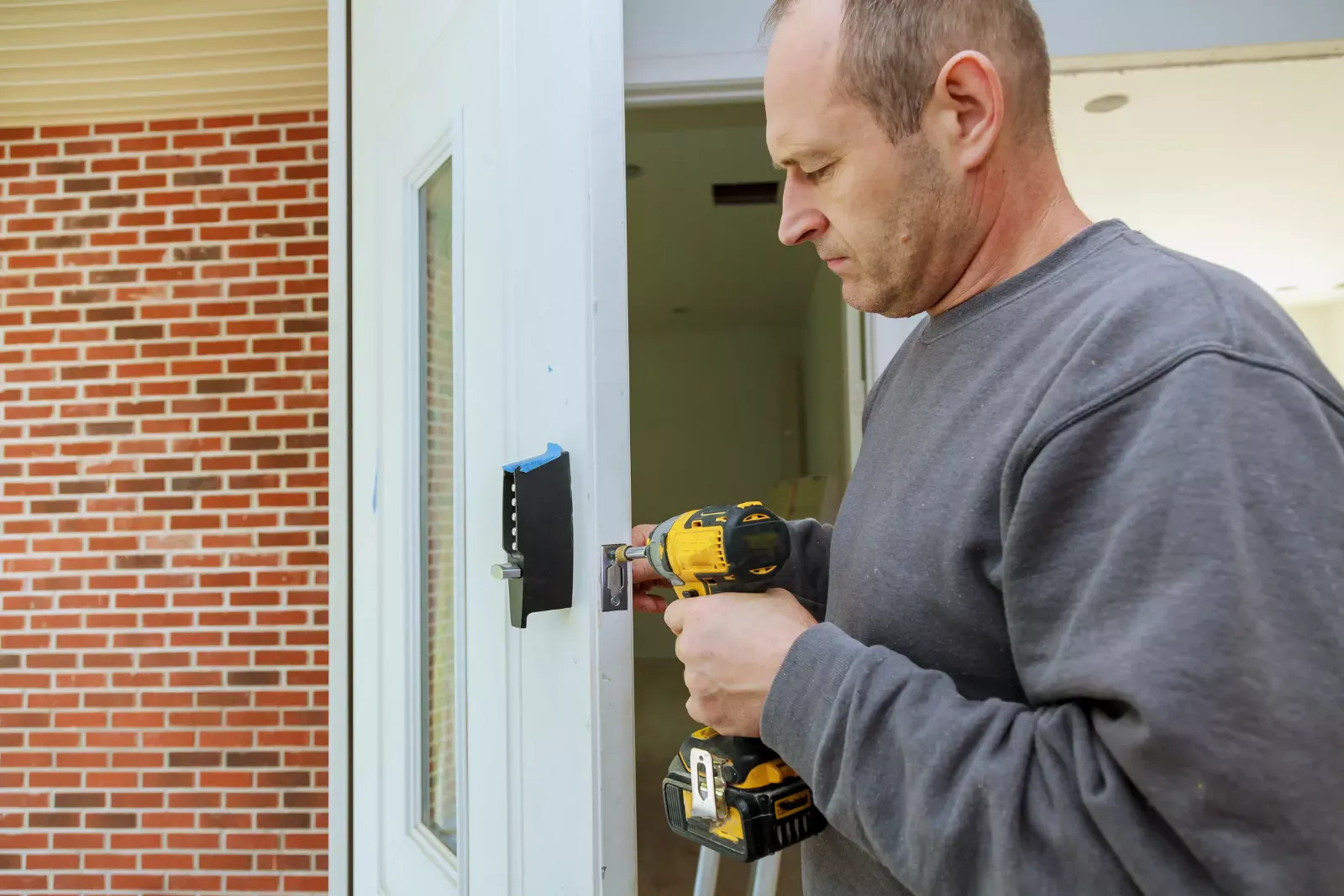
Most of us lock the front door without a second thought, assuming that if it is locked, it is secure. Unfortunately, not all locks are equal. Some can be opened in seconds with basic tools, and others would not satisfy your home insurer if you had to make a claim. This guide helps you work out what lock you have, whether it is good enough, and what simple upgrades make a real difference.
Why door security matters
Most burglars are opportunists. They look for the easiest way in, and the front and back doors are the most common entry points. A burglar will usually give up if forcing a door takes more than a minute or two, because noise and delay increase the chance of being seen. A strong door, a good lock and a solid frame make your home a harder target, and they are one of the cheapest forms of protection you can buy.
Step 1: identify your lock
Open the door and look at its edge. Most UK front doors fall into one of these categories.
- Night latch (rim lock). A small box on the inside of the door, operated by a key from outside. Often fitted on its own, which gives only basic security.
- Mortice lock. A lock fitted inside the door edge, with a long slim body and a keyhole on both sides. Look for a stamp saying BS3621, which is the standard most insurers ask for on wooden doors.
- Euro cylinder lock. Found on UPVC, composite and many aluminium doors. A small cylinder sits in the door and a multipoint mechanism locks the door at several points.
Step 2: check the standards
Look for these marks. On a mortice lock, a BS3621 stamp on the faceplate means it has passed a recognised test. On a euro cylinder, look for the British Kitemark with TS007 3-star, or the Sold Secure Diamond SS312 standard. These are designed to resist snapping, picking, drilling and bumping.
If your cylinder has no markings at all, or is a cheap one that came with the door, it is likely to be vulnerable.
The anti-snap problem
Snapping is a common attack on UPVC and composite doors. A burglar applies force to a euro cylinder that sticks out past the handle, and it breaks in two, leaving the mechanism exposed so the door can be opened. It takes seconds and little skill.
The fix is straightforward. Replace the cylinder with an anti-snap model that has a sacrificial break line at the outer end, so the weakened section snaps and leaves the core intact. It must also be the right length: ideally, no more than 3 mm should protrude beyond the handle or escutcheon. A locksmith can measure and fit the right size in minutes.
Simple upgrades that make a real difference
- Fit a 3-star cylinder or a BS3621 mortice lock, preferably both on a wooden door, with a night latch as a secondary lock.
- Add security handles or escutcheons. Hardened plates around the keyhole protect the cylinder from drilling and pulling.
- Add hinge bolts. These stop the door being lifted off its hinges on the hinge side.
- Strengthen the frame. A strong lock in a weak frame still fails. Fit a London bar or reinforcing plate, and use long screws on the strike plate, so that kicking the door does not split the frame.
Remember to use the lock properly
Many UPVC doors have a multipoint lock that only engages fully when you lift the handle and turn the key. If you simply pull the door shut, it may only be on the latch, which is much easier to defeat. Make a habit of lifting the handle and locking with the key every time you leave, and at night.
When to replace your locks
Replace them if you have just moved in, lost keys, had an attempted break-in, or if the lock is stiff, worn or unmarked.
Check your insurance
Home insurance policies often require specific locks, and failing to meet them can lead to a claim being reduced or refused. Check your policy documents, or ask your insurer which standards apply. A locksmith can confirm what you have fitted and upgrade it, often in a single visit.
Need a lock fitted or fixed?
If your lock is broken, you have been locked out, or you are worried about your security after a break-in, call us at any hour. Our vetted, insured locksmiths can usually reach you within 30 to 60 minutes. We quote on the phone, use non-destructive entry wherever possible, and can fit insurance-approved locks on the spot, so your home is secure again before you go to bed.