
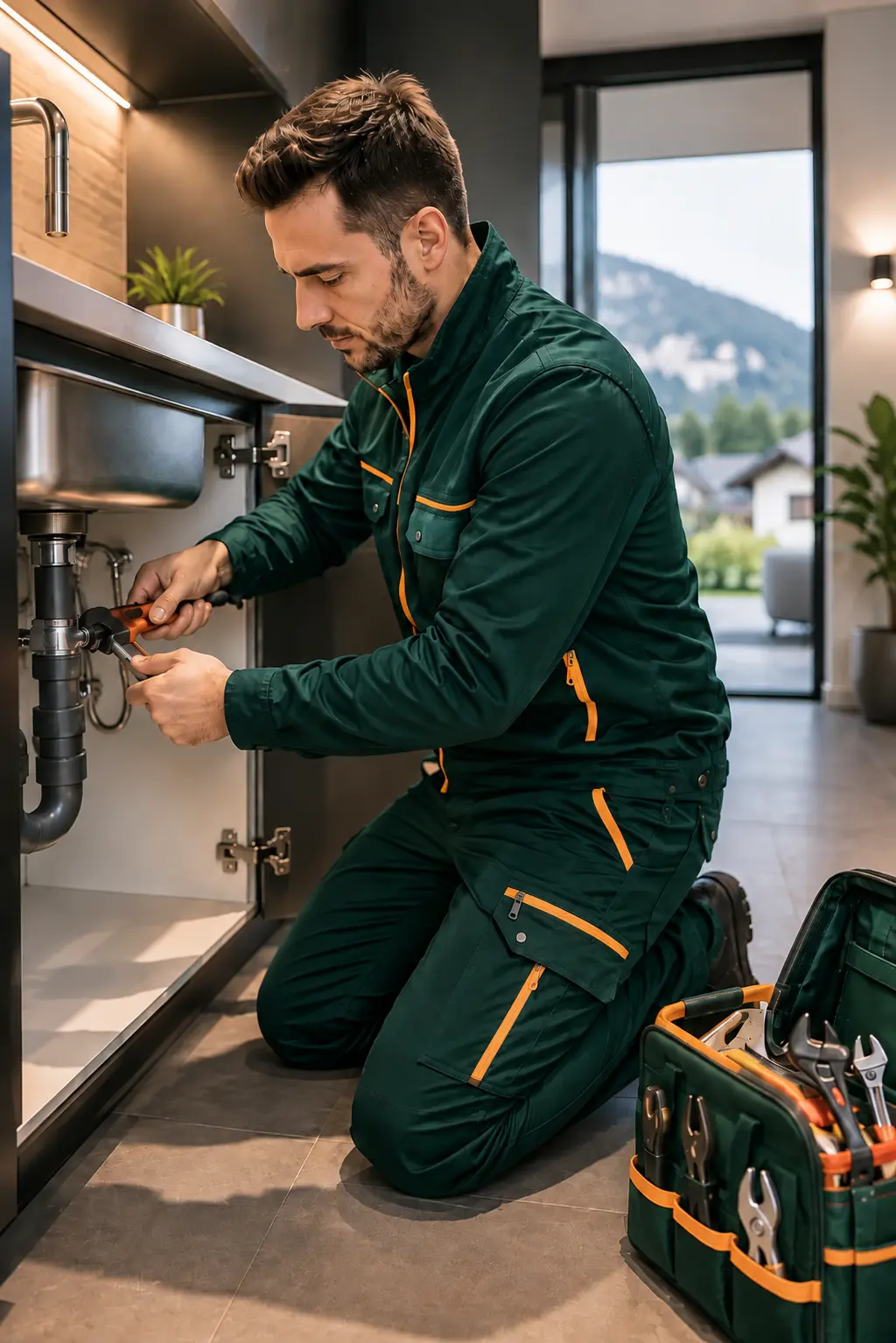
A burst pipe is one of the most stressful things that can happen at home. Water can pour out at more than 20 litres a minute, soaking floors, bringing down ceilings and reaching your electrics before you have found your shoes. The good news is that the first ten minutes matter more than anything else, and the steps are simple. This guide walks you through them in the order you should do them.
Minute 1: stay calm and find the stopcock
Your first job is to stop more water coming in. The main stopcock is the valve that shuts off the supply to the whole property. In most UK homes it sits under the kitchen sink, but it can also be in a utility room, a downstairs toilet, under the stairs, in the garage or near the front door. In some flats it is in a shared cupboard or meter box.
Turn the handle clockwise until it stops. It can be stiff if it has not been touched for years, so use both hands, but do not force it with tools because an old valve can snap. If you live in a flat and cannot find or reach your own stopcock, contact your landlord, building manager or neighbours straight away.
Minutes 2 to 3: drain the system
Closing the stopcock stops new water, but the pipes still hold water that will keep leaking from the burst. Open all the cold taps, starting with the highest in the house and working down, and flush the toilets once. Leave the taps open until the flow stops. This takes the pressure off the damaged pipe and cuts the amount of water that escapes.
If the burst is on the hot water or heating side, also switch off the boiler and any immersion heater. Running a heating system with a drained or leaking circuit can damage the boiler and the pump.
Minutes 3 to 5: deal with the electrics
Water and electricity are a dangerous combination. Look at where the water is going. If it is dripping through a ceiling light, running down a wall with sockets, or pooling near appliances or the fuse board, treat it as an electrical risk.
- If you can reach the consumer unit (fuse box) without standing in water, switch off the main switch.
- If the unit is wet or you would have to wade through water to reach it, do not go near it. Leave the house and call us or your electricity distributor.
- Never touch switches, sockets or appliances with wet hands or while standing on a wet floor.
Minutes 5 to 8: contain and protect
With the water off and the power safe, limit the damage.
- Place buckets, bowls and saucepans under drips, and use towels to soak up standing water.
- Lift rugs, move furniture away from the wet area and take valuables, paperwork and electronics upstairs.
- If water is collecting in a bulge in the ceiling, place a bucket underneath and carefully pierce the lowest point with a screwdriver. It sounds counter-intuitive, but a controlled hole is far better than the whole ceiling giving way.
Minutes 8 to 10: document and call
Before you clean up, take clear photos and short videos of the damage, the burst pipe if you can see it, and any damaged belongings. Your insurer will want evidence, and photos taken now are much more convincing than a description later. Make a note of the time the burst happened and when you turned the water off.
Then call a plumber. A burst pipe needs a proper repair, not just a bandage. A good emergency plumber will confirm the water is isolated, cut out and replace the damaged section, check the rest of the run for weak spots, and refill and test the system.
How to avoid it happening again
Most bursts come from freezing, corrosion or accidental damage. Lag exposed pipes in lofts and garages, keep the heating on low (around 12 to 15 degrees) if you go away in winter, and check that your stopcock turns freely. If a pipe has burst once, have the whole run inspected, and get any ceiling stain or drop in boiler pressure looked at early.
When to call us
If water is coming in faster than you can stop it, if you cannot find the stopcock, or if the leak is near electrics, call straight away. We answer 24 hours a day and send a vetted, insured plumber who can usually reach you within 30 to 60 minutes. Tell us what has happened, and we will talk you through making it safe while help is on the way.