
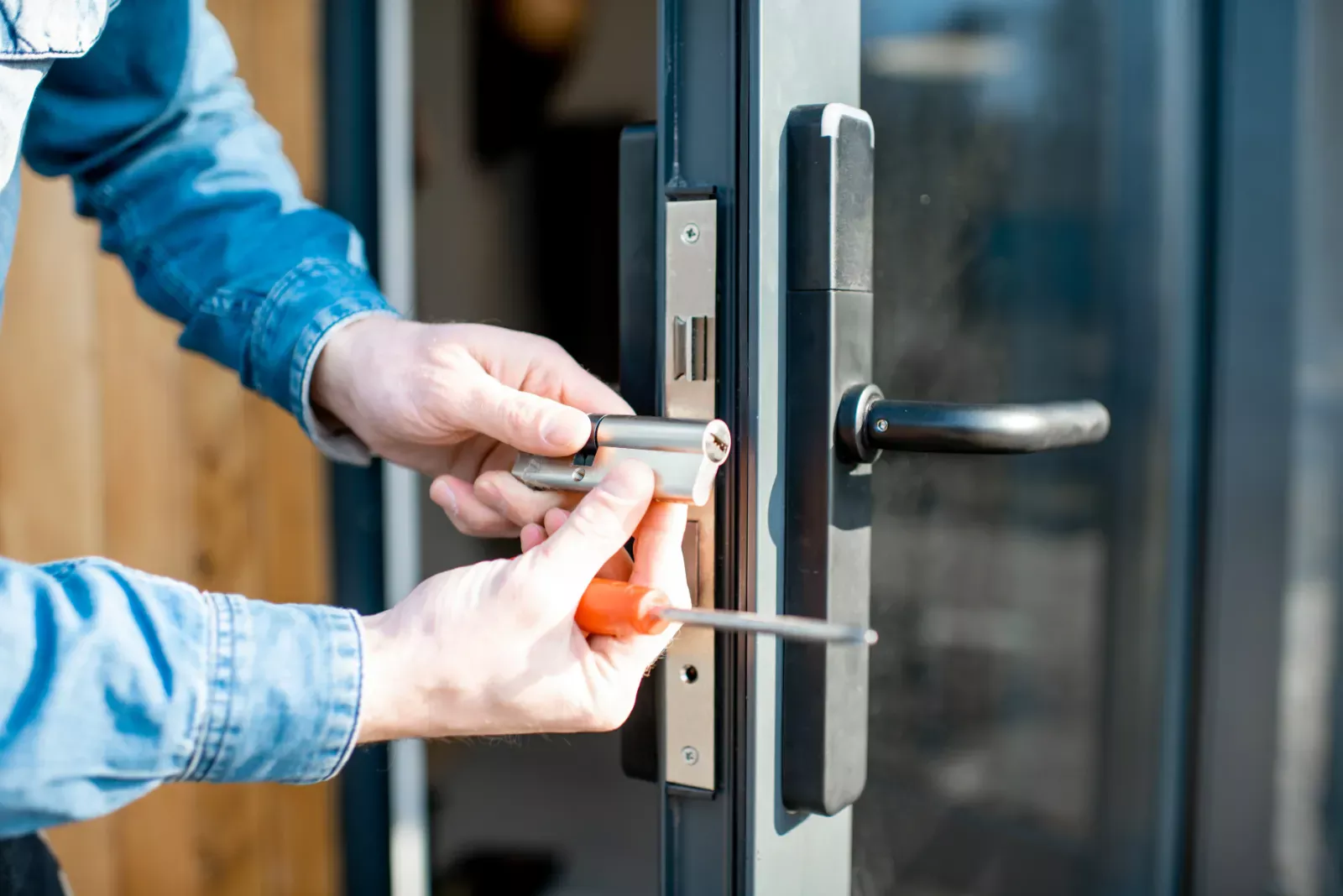
It is a horrible little moment: a click in your hand, half a key in the lock and the other half between your fingers. It happens more often in cold weather and with stiff or worn locks. What you do next matters, because the wrong move can turn a quick extraction into a full lock replacement.
Stop turning the key and never force or glue the pieces. If enough of the broken key is sticking out, you can try to pull it straight out with fine pliers, but if it does not come at once, stop. A locksmith can usually extract it with specialist tools and often save the lock.
Need someone now? Call 02034112027 Answered 24 hours a day
First: stop, and do not make it worse
Take your hand off the key and resist the urge to try again. Specifically, do not:
- Try to turn the lock with the broken piece.
- Push the other half of the key back in to line it up.
- Use superglue to stick the two halves together.
- Poke around with a screwdriver, a knife or paper clips.
- Spray in large amounts of oil or grease.
Keep both halves of the key. A locksmith can use the pieces as a pattern to cut a replacement quickly.
Can you pull it out yourself?
Look at the lock. If a few millimetres of the broken key stick out past the face of the cylinder, you can try a pair of fine needle-nose pliers. Grip the end firmly and pull straight out, without twisting.
If the piece does not move with a gentle, straight pull, leave it. Every extra attempt risks pushing it deeper or damaging the pins. If the broken end is flush with the cylinder or inside it, do not dig for it.
If you are locked out, or locked in
If the door was only latched and not locked, try the handle first. If you are outside and the door is locked, a locksmith can usually open it without damage. Our guide to being locked out explains how that works and what it should cost.
If you are inside and cannot get out, stay calm and use another exit if you can. In a fire or a medical emergency, call 999. It is a good habit to keep a key where everyone in the house can reach it quickly.
How a locksmith removes a snapped key
Locksmiths use thin extractor tools, shaped like fine hooks or blades, that slide alongside the broken piece and catch the cuts in the key. They draw the piece out without disturbing the pins. In many cases the lock keeps working. Drilling is a last resort and destroys the lock.
Once the key is out, the locksmith will test the lock. If the cylinder is stiff, worn or damaged, replacing it is quick and can usually be done during the same visit.
Should you replace the lock afterwards?
Consider a new cylinder if:
- The cylinder is damaged, gritty or stiff.
- The lock is old, or is not an anti-snap design.
- Other keys are lost or you do not know who has copies.
On UPVC and composite doors, ask for an anti-snap euro cylinder rated to TS 007 3-star (or a 1-star cylinder with 2-star security handles). On wooden doors, look for a BS 3621 mortice lock. Your insurer may have its own requirements, so check. Our guide on whether your front door lock is secure covers this in detail.
Why keys snap, and how to avoid it
- Wear. Keys fatigue over years of use. If yours is bent, thin or has rounded edges, replace it.
- Copies of copies. Cheap or repeated copying makes keys weaker and less accurate. Always copy from an original.
- A stiff lock. A dry or dirty cylinder needs more force. Use a dry graphite or PTFE-based lock lubricant, not thick oil or grease.
- A misaligned door. If you have to lift, pull or push the door to lock it, the door has dropped. See our guide on UPVC doors that will not lock.
- Using the key as a lever. Never use it to pull the door shut, and avoid heavy keyrings hanging from a key in the lock.
When to call us
If the key has snapped and you cannot get it out, call us. We answer 24 hours a day and send a vetted, insured locksmith, usually within 30 to 60 minutes. We will give you a clear price before work starts, and we will always try to keep your lock rather than replace it.
Common questions
Can a locksmith remove a broken key without damaging the lock?
In most cases, yes. Specialist extractor tools grip the broken piece and draw it out without harming the pins inside. If the cylinder is already worn or damaged, a locksmith may recommend replacing it during the same visit.
Can I use superglue to stick the key back together?
No. Glue can get into the cylinder and jam the pins, and it can bond the key to the lock. That turns a quick extraction into a full replacement.
How much does it cost to remove a broken key?
It depends on the time of day, the type of lock and whether a new cylinder is needed. Ask for the total price, including call-out, labour, parts and VAT, before any work starts. You can also see our pricing page.
Will home insurance pay for a new lock after a snapped key?
A key that snaps through wear is not usually an insured event, but a lock damaged in a break-in often is. Policies vary, so check your wording, and ask your locksmith for an itemised invoice.