
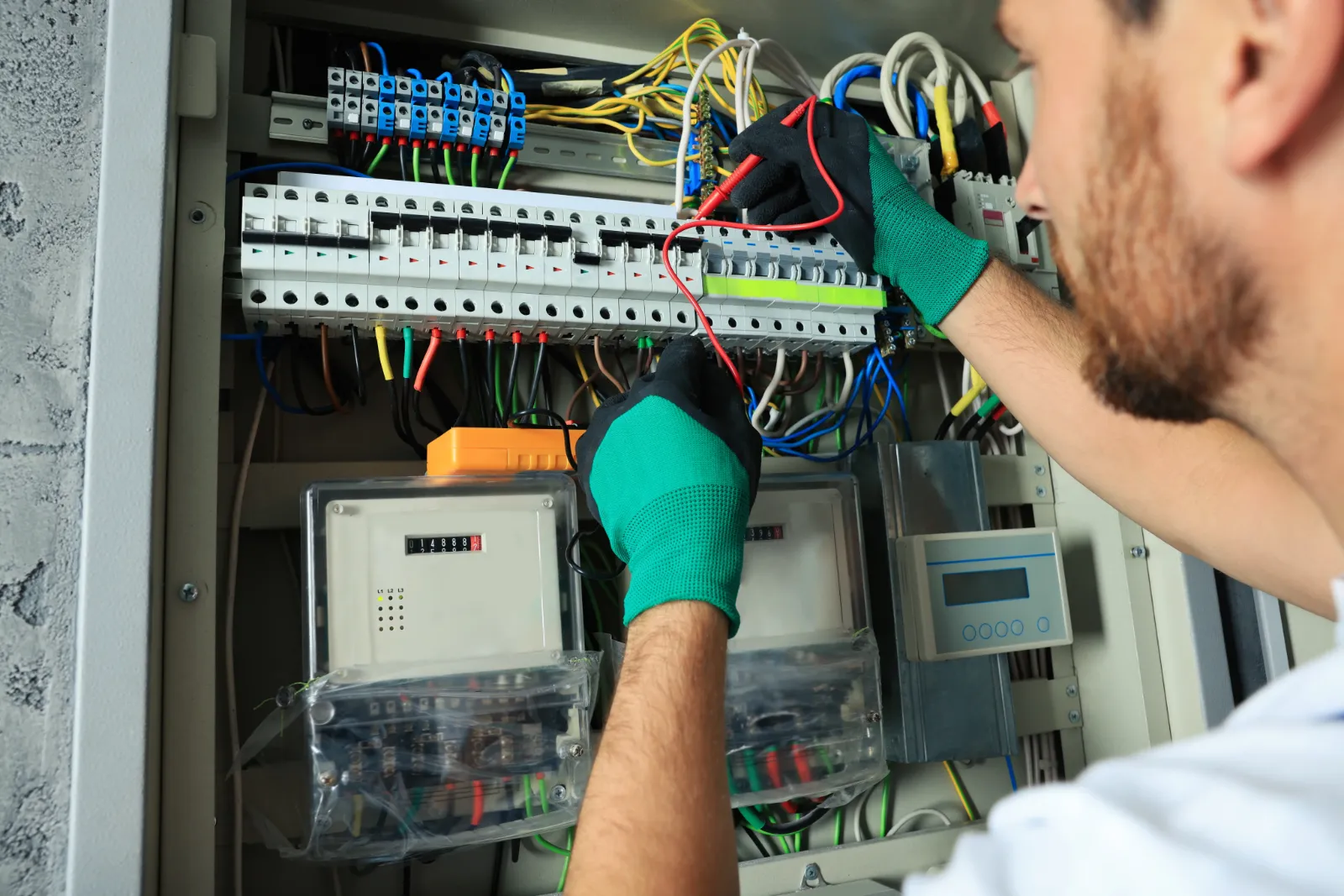
It is dark, the lights have gone off again, and you are heading for the fuse board for the third time this week. A tripping fuse board is annoying, but it is also doing exactly what it was designed to do: cutting the power when something is wrong. The real question is what that something is. This guide explains the most common causes, what you can safely check yourself, and when it is time to call a qualified electrician.
What is actually tripping?
Modern homes have a consumer unit, usually called the fuse board, with a row of switches. There are two main types of protection, and which one is tripping tells you a lot.
- MCBs (miniature circuit breakers) protect individual circuits such as lighting, sockets or the cooker. They trip when a circuit is overloaded or there is a short circuit.
- RCDs (residual current devices) detect small leaks of current to earth, which could give someone an electric shock. They trip fast, often in a fraction of a second.
Some boards combine both in a single device called an RCBO. If the whole board goes off at once, the main RCD is usually the cause. If only one circuit goes, an MCB or RCBO has tripped.
Cause 1: an overloaded circuit
Every circuit has a limit. Plug a kettle, toaster, microwave and heater into the same ring main and you may exceed it. The breaker trips to stop the cable overheating. If it only happens when several heavy appliances run together, spread the load across different sockets or circuits. If it happens with a normal load, the problem is likely elsewhere.
Cause 2: a faulty appliance
This is the most common cause of RCD trips. A failing washing machine, dishwasher, immersion heater, tumble dryer or kettle can leak current to earth. To find the culprit:
- Switch off and unplug everything on the circuit that tripped.
- Reset the switch. If it holds, the fault is in something you unplugged.
- Plug appliances back in one at a time, waiting a minute between each.
- The one that causes the trip is faulty. Leave it unplugged and have it repaired or replaced.
If the switch trips again with nothing plugged in, the fault is in the fixed wiring, and you should stop there.
Cause 3: moisture and damp
Water gets into places it should not. Outdoor sockets, garden lighting, bathroom fittings, extractor fans and even a leaking roof can let moisture reach live parts. Circuits that trip only when it rains, or after a shower, point to damp. Do not keep resetting these: wet electrics are a shock risk.
Cause 4: damaged or ageing wiring
Cables do not last forever. Rubber and early PVC insulation becomes brittle, rodents chew through it, and nails or screws pierce it during DIY. A damaged cable can cause a short circuit or an earth fault, and it may not be visible because it runs inside walls. Homes with a very old fuse board, or with rewired sections done at different times, are more likely to have problems.
What is safe to check yourself
- Unplug appliances on the affected circuit and reset the switch once.
- Check for visible signs of water near sockets and fittings.
- Press the test button on the RCD to make sure it works.
- Look for scorch marks, melted plastic or a smell around sockets and the board.
What you should not do is remove the cover of the consumer unit, tape down a switch, replace a breaker with a bigger one or keep resetting a circuit that trips immediately. Doing so removes the protection that is keeping you safe.
When to call an electrician
Call a qualified electrician if the board trips repeatedly, if it trips straight away when reset, if you cannot identify the cause, or if you notice any of these:
- A burning or fishy smell.
- Scorch marks, hot sockets or a buzzing sound.
- Lights that flicker or dim when appliances start.
- A fuse board older than around 25 years, or one with rewirable fuses.
An electrician will test the circuits, find the fault and make it safe. They can also tell you whether it is time to upgrade your consumer unit to a modern one with RCD protection on every circuit.
Need help now?
If you have no power, or the board will not stay on, we can help at any hour. Our electricians are vetted, qualified and insured, and they carry the parts for the most common faults. Call us and we will make it safe first, then fix it.