
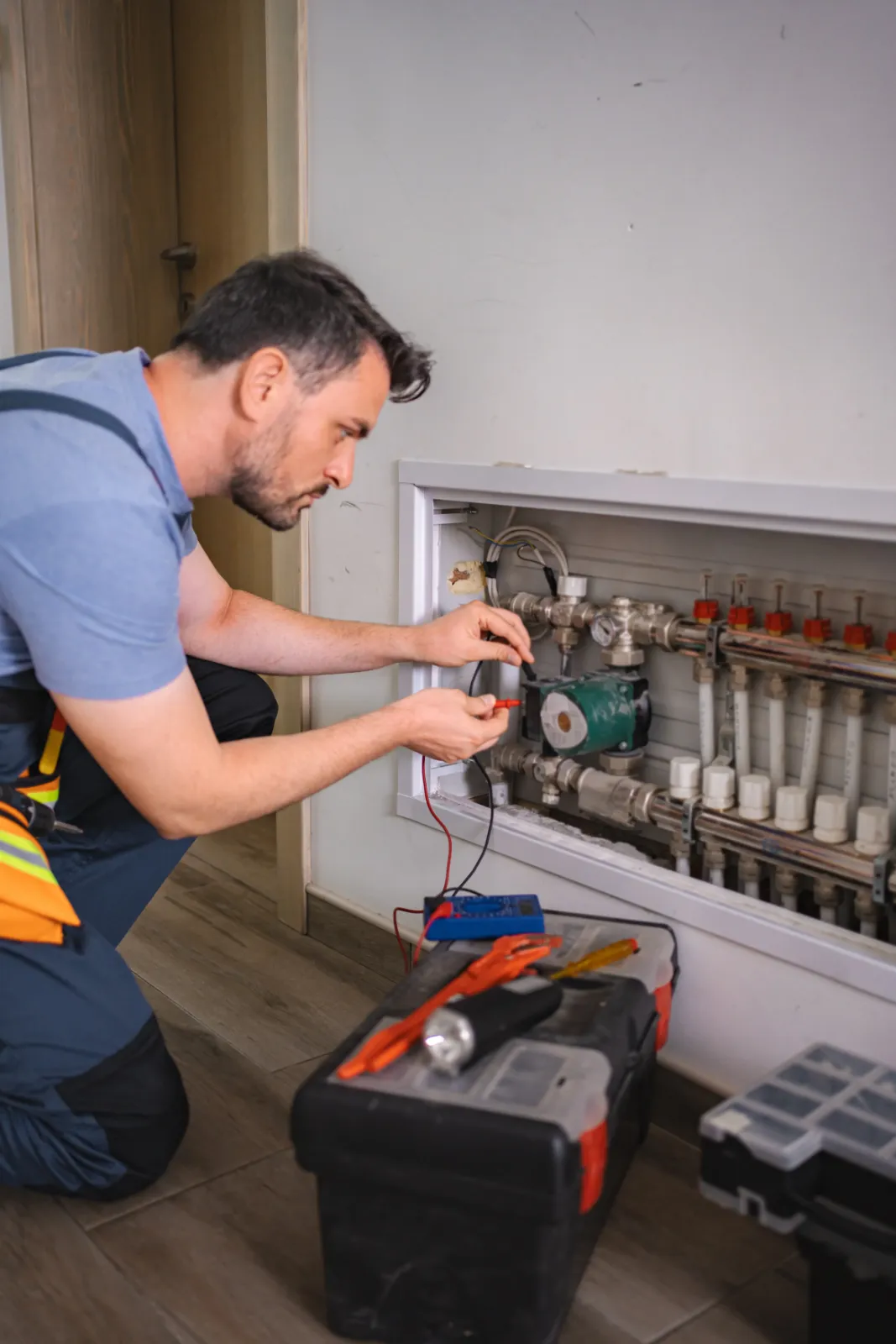
You turn on the tap on a freezing morning and get nothing, or a thin trickle that dies after a few seconds. Chances are a pipe has frozen. Water expands as it turns to ice, and that pressure is what splits pipes. A frozen pipe is not yet a burst pipe, and what you do in the next few minutes decides which one you end up with.
Turn off the stopcock, open the taps, then warm the pipe slowly with a hairdryer on a low setting or a hot water bottle, starting nearest the tap. Never use a naked flame or boiling water. Once the water flows again, check carefully for leaks, because a pipe can split while frozen and only start leaking as it thaws.
Need someone now? Call 02034112027 Answered 24 hours a day
How to tell a pipe has frozen
- No water, or only a trickle, from one or more taps.
- Frost on visible pipework, or one stretch of pipe that feels icy cold.
- A toilet that will not refill after flushing.
- Gurgling or banging noises when you try the taps.
- A boiler that has shut down with a fault code. In cold snaps the plastic condensate pipe that carries waste water outside is a common freezing point. Our no hot water checklist explains how to deal with it.
If nothing runs anywhere in the house, ask a neighbour. The cause could be a supply problem with your water company rather than a frozen pipe inside your home.
Step 1: turn off the water at the stopcock
This is the step people skip, and it matters most. If the pipe has already split, the ice is acting as a plug. When it melts, water will pour out. Turn the main stopcock clockwise to shut off the supply before you start thawing, so a split pipe cannot flood you. It is usually under the kitchen sink, but it can be in a utility room, under the stairs or in the garage.
Then open all the cold taps. That gives the water somewhere to go as the ice melts and relieves pressure in the pipe. Leave them open while you work.
Step 2: find the frozen section
Pipes freeze where the cold gets at them. The usual suspects are:
- Pipes in the loft, garage, cellar and other unheated spaces.
- Pipes running along external walls, including under the kitchen sink.
- Outside taps and the pipes that feed them.
Start at the tap that is not running and follow the pipe back towards where it enters the house. The frozen part often has frost on it, feels colder than the rest, or looks slightly swollen.
Step 3: thaw it slowly and safely
Keep one tap open, then warm the pipe gently, starting at the end nearest the tap and working back towards the frozen section. That lets melting water and steam escape instead of building up pressure.
- Wrap the pipe in towels soaked in warm (not boiling) water, or lay a hot water bottle against it.
- Use a hairdryer on its lowest setting, held a hand width away and kept moving. Keep the cable and the dryer well away from any water, and never leave it unattended.
- Keep the heating on and open the doors of cupboards where pipes run, so warm air reaches them.
Do not use a blowtorch, heat gun, paint stripper or any naked flame, and do not pour boiling water on the pipe. Sudden, intense heat can crack metal and plastic, and flames can set fire to lagging, timber and loft insulation.
Step 4: check for leaks as the water returns
When water starts to flow, turn the stopcock back on slowly, and watch the pipe, the joints and the ceilings and walls below. A pipe can split while frozen and only start leaking once the ice has melted. A damp patch, a drip, a new stain or a falling boiler pressure are all signs of a split.
If you find a leak, turn the water off again at once and follow our guide to a burst pipe in the first 10 minutes.
If the pipe will not thaw
Some pipes cannot be reached, because they run inside walls, under floors or above ceilings. Do not chip at plaster or force anything. Leave the stopcock off, keep the heating on, and call a plumber if:
- You cannot find the frozen section.
- The pipe is hidden or out of reach.
- You can see or hear a leak, or water is near electrics.
- The boiler has locked out and will not restart.
A plumber can locate the freeze, thaw it safely and check the pipework for splits before the water goes back on.
How to stop pipes freezing again
- Lag exposed pipes. Foam pipe insulation is cheap and quick to fit on pipes in lofts, garages, cellars and along external walls.
- Insulate the loft tank, but leave the area directly underneath it clear so some heat from the house can rise to it.
- Keep the heating on low (around 12 to 15 degrees) during cold snaps and when you are away.
- Open under-sink cupboard doors on very cold nights so warm air can reach the pipes.
- Protect outside taps. Disconnect hoses, and turn off and drain the supply to outdoor taps for winter.
- Fix dripping taps. A slow drip can freeze in the pipe or waste.
- Know your stopcock. Check that it turns freely, and make sure everyone at home knows where it is.
When to call us
If you have no water, cannot thaw the pipe, or can see a leak, call us at any hour. We answer 24 hours a day and send a vetted, insured plumber who can usually reach you within 30 to 60 minutes. Tell us what you can see, and we will talk you through making it safe while help is on the way.
Common questions
Can I use boiling water to thaw a frozen pipe?
No. Boiling water can crack cold metal and warp plastic pipe and fittings. Use gentle, steady warmth instead, such as a hot water bottle, warm towels or a hairdryer on a low setting held at a distance.
How long does a frozen pipe take to thaw?
It depends on how solid the ice is and how long the pipe has been frozen. It can take anything from a short while to a few hours. Keep the heating on, keep the taps open and do not rush it with too much heat.
Will a frozen pipe always burst?
No. Many pipes freeze and thaw without any damage. But ice expands, and it can crack a pipe or split a joint, so always check for leaks once the water starts flowing again.
Does home insurance cover frozen pipes?
Many policies cover damage from frozen or burst pipes, but some attach conditions, such as keeping the heating on while you are away. Check your policy wording, and take photos of any damage before you clear up.